
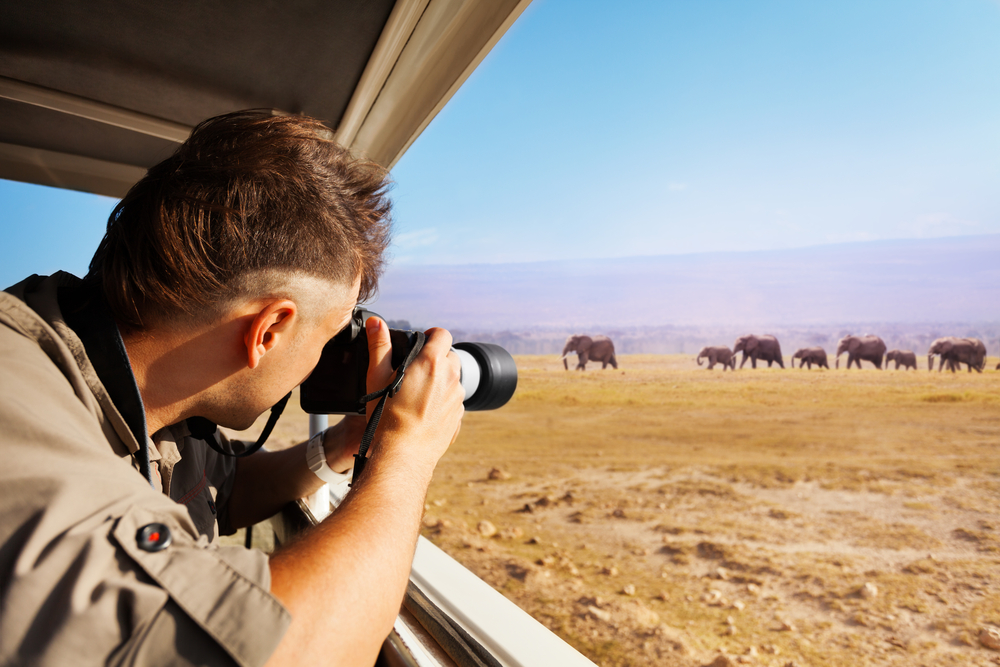
There are many different elements that must come together to take truly amazing photographs of wildlife. Having a camera with a telescopic lens is a great start, but even with a 600mm lens it is still necessary to get quite close to the subject for the photographs to be of interest.
Many animals have something called a ‘fear circle’, which describes the distance that the animal will allow between themselves and a human before they run or take flight. Wildlife photographers should be aware of each animal’s ‘fear circle’, as those that get too close will never get the shot they want. At best, they will capture the rear end of the animal as it exits the scene.
The Skill of Fieldcraft
Developing better fieldcraft skills is one way to create much better wildlife photographs, as well as having the added benefit of not disturbing or stressing the wildlife that you wish to photograph.
Camouflage
Camouflage is a very useful tool for budding wildlife photographers such as John Quarenghi, as it hides the photographer from sight. It is worth noting that camouflage is much more effective if it is worn properly, so photographers might consider investing in camouflage gloves and a balaclava, in addition to a jacket. A bush hat is another excellent way to blend into the surroundings, enabling the photographer to get much closer to their subject.
Some photographers will not wish to wear full camouflage. Many choose the elements that they believe are most necessary, which might be a jacket and face paint, or simply using camouflage-patterned accessories and photographic equipment to get the shot they want.
No matter the amount of camouflage used, the majority of photographers agree that positioning and technique are more important – and even breathing and scent may have a greater effect on the final photograph than camouflage does. For further information about the role of camouflage in wildlife photography, please refer to the embedded PDF.

Stalking or Waiting
There are many ways to ‘find’ a subject in the wild. Many wildlife photographers opt for a hide, a camouflaged tent from which they can see animals approaching. Stalking an animal is another method of finding a subject. However, stalking requires an enormous amount of skill and know-how. Sitting still and letting the animals come into view is another option. Camouflage can help with this approach, but it is very important to stay completely motionless to capture an amazing in-situ shot.